UX/UI CASE STUDY
Upper Coworking
Visualizing the future of workspace management through field-driven design.
Upper Coworking was a project born even before its physical doors opened. I was involved during the construction phase to design an admin panel that could handle desk bookings, subscriptions, and the entire community ecosystem. To truly understand the "soul" of the project, I visited the site, spoke directly with the owners, and walked through the unfinished building.
The design palette wasn't chosen from a screen, but from the walls. I integrated the architectural colors and the physical structure of the spaces directly into the interface's hierarchy and components.
By talking to the founders on-site, I translated their specific operational needs into a clean Design System centered on "Outfit" typography and a mint-based "fresco" palette.
Before drawing a single pixel, I needed to understand the environment where this software would live. My process began with Stakeholder Interviews to map out the daily operations: how do they check in a guest? How do they handle a sudden room change? What frustrates them about current tools?
Central to the project was the creation of a consistent UI library. This ensured that every component—from tables to modal windows—shared the same DNA, reducing estimated development time by 30% through reusable components.
The Design System was delivered not just as a UI kit, but as a logic-based language. This "ready-for-code" approach ensures that future modules (e.g., Event Management) can be built by developers without needing new high-fidelity mockups for every screen.
The quick brown fox jumps.
Bold, Semi-Bold, Regular.
The final UI focuses on simplicity and speed. I implemented global quick-action shortcuts and ensured that critical tasks take no more than two clicks.
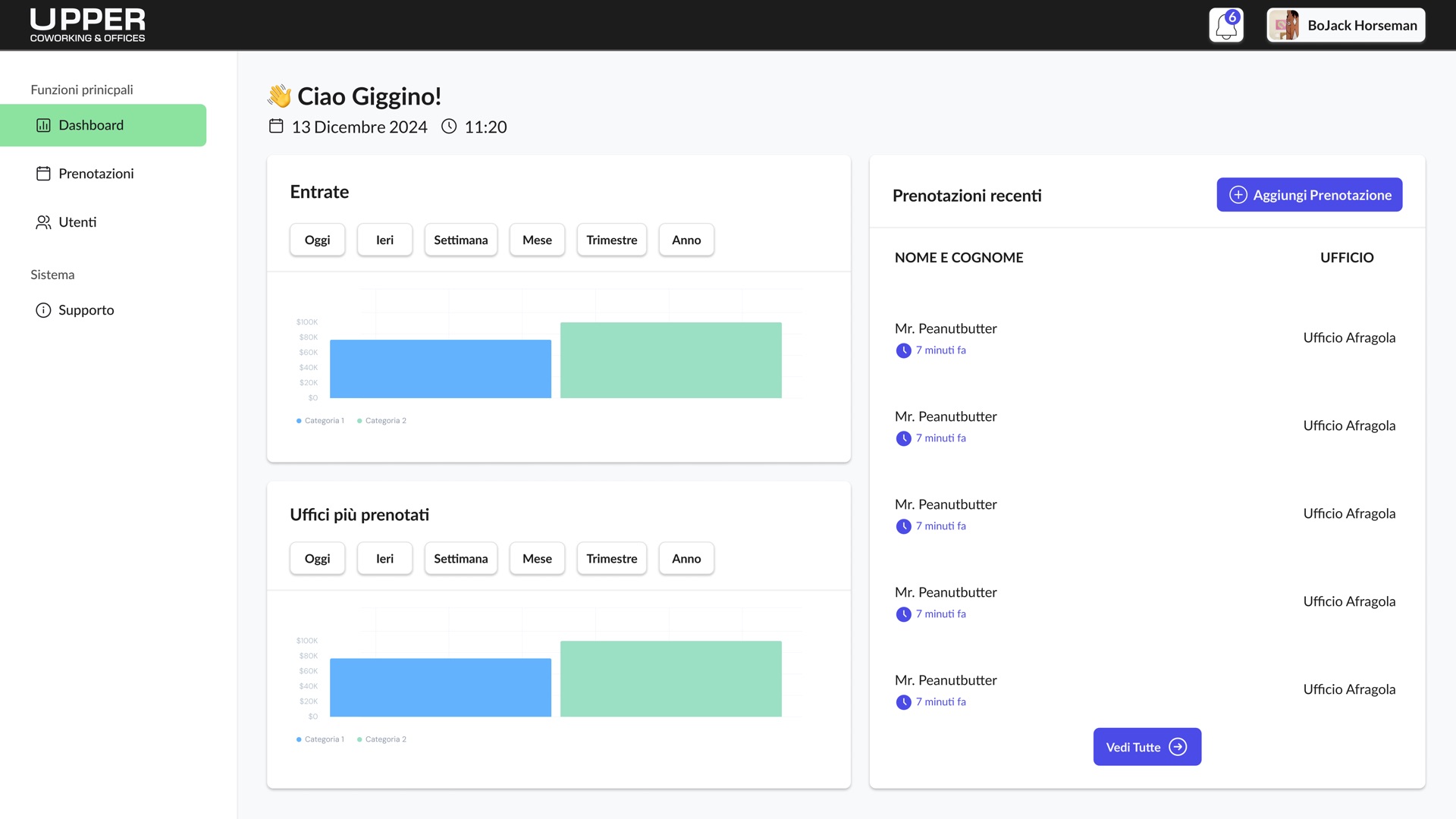
The dashboard utilizes a **card-based layout** to present financial health ("Entrate") and spatial utilization ("Uffici più prenotati") side-by-side. I implemented **Time Scale Toggles** (Oggi, Ieri, Settimana) directly within each widget, allowing managers to switch between granular daily checks and high-level quarterly reviews ("Trimestre") without leaving the context.
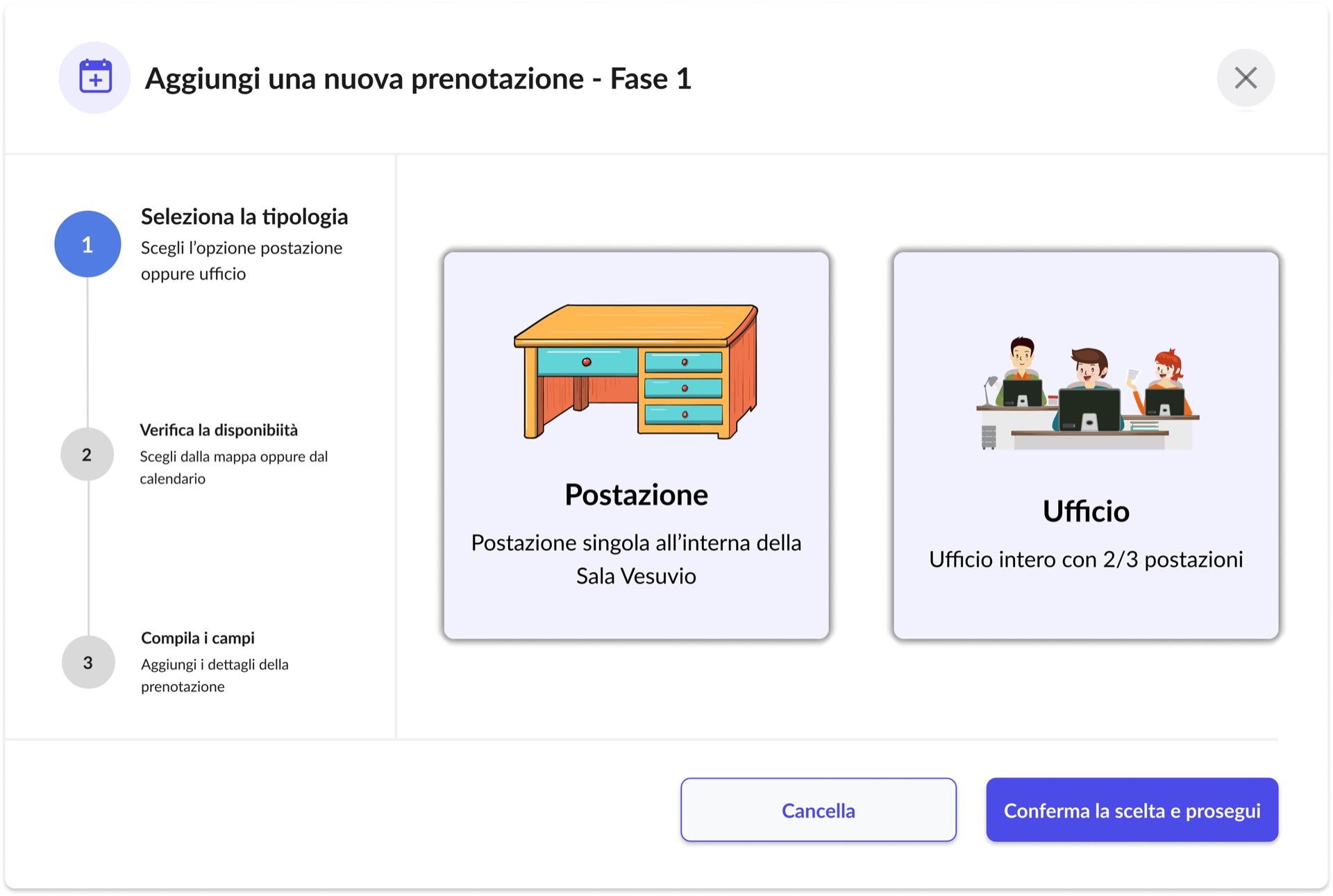
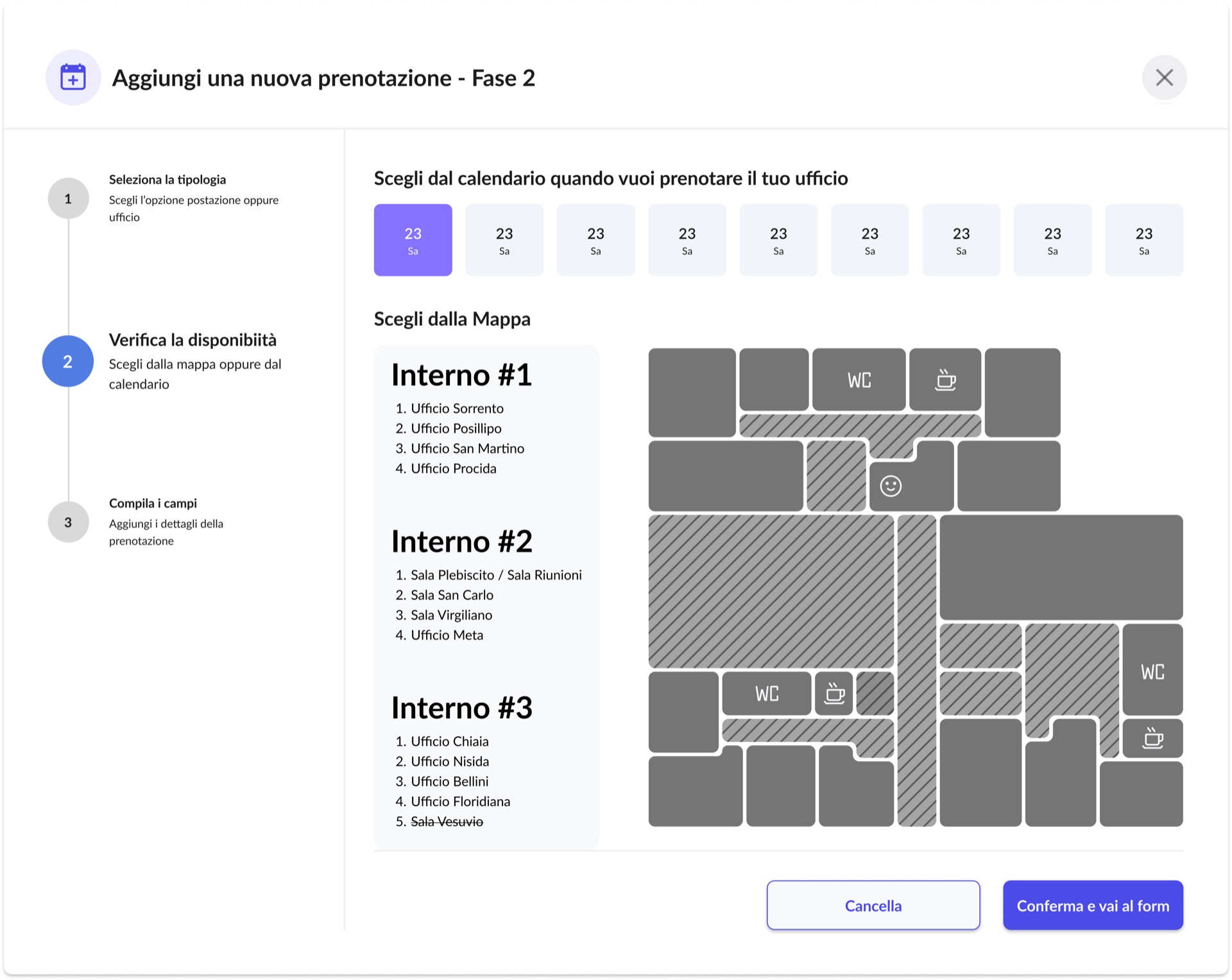
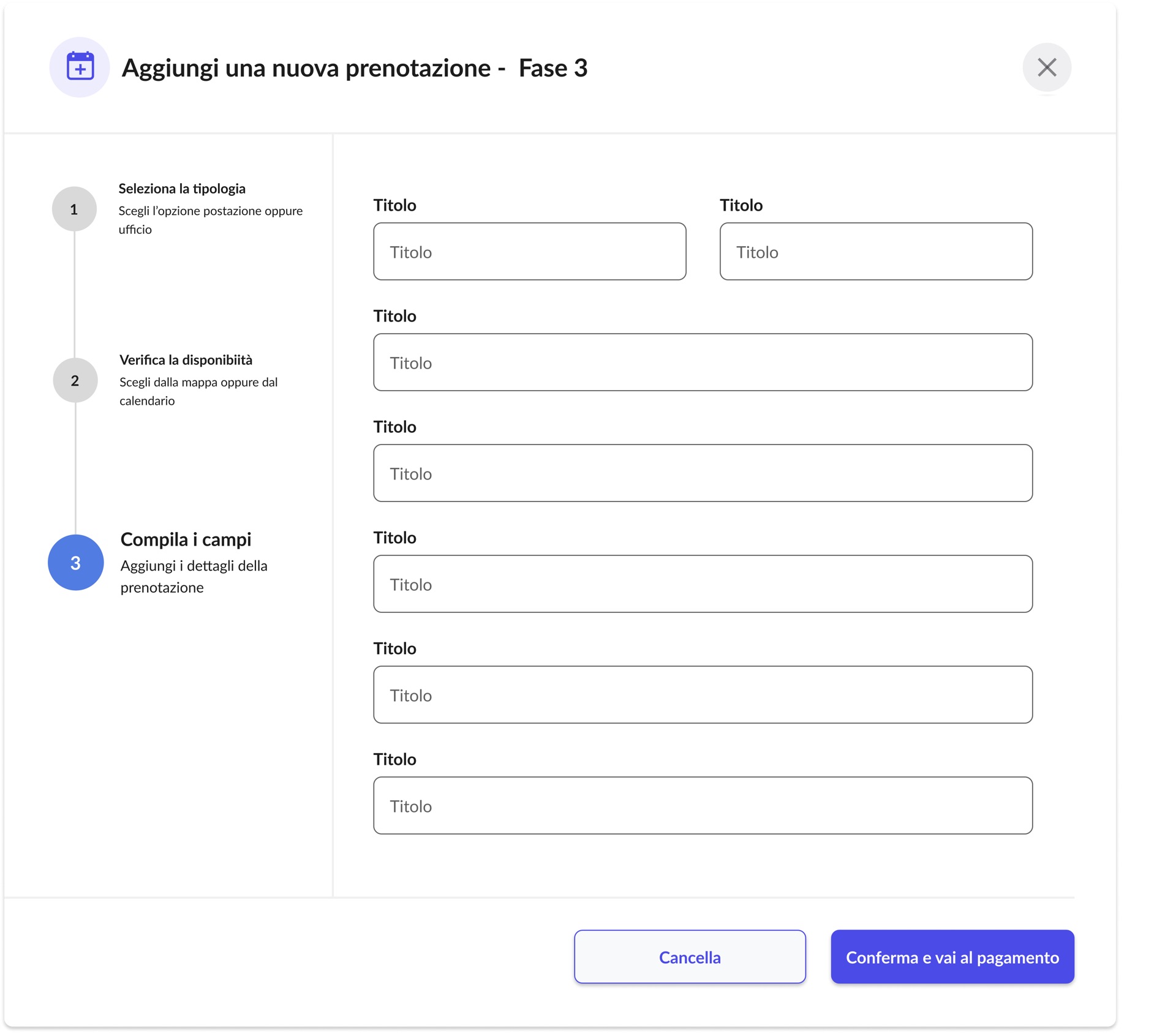
Booking a desk is a high-friction task. To solve this, I designed a **Stepper Modal** that explicitly guides the user through three distinct phases: 1. Seleziona tipologia, 2. Verifica disponibilità, and 3. Compila i campi. The "Ghost Button" for cancellation vs. the "Primary Blue" for confirmation prevents accidental data loss.
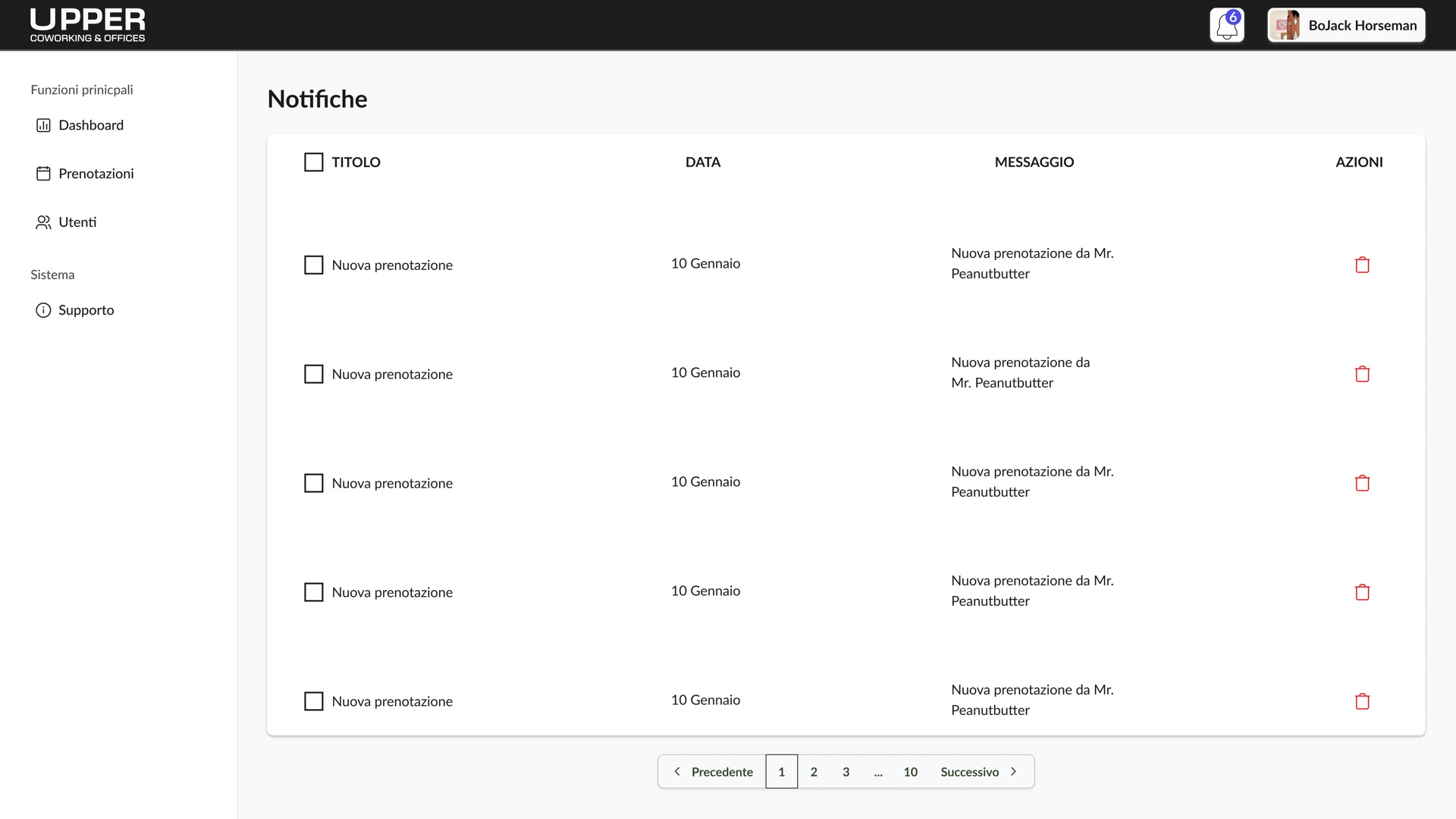
Co-working spaces are dynamic ecosystems. The Notification Center focuses on **bulk management**, allowing staff to select multiple updates via checkboxes and clear them instantly. The layout is stripped of decorative elements, prioritizing legibility and actionability (Delete) for high-volume updates like new bookings.
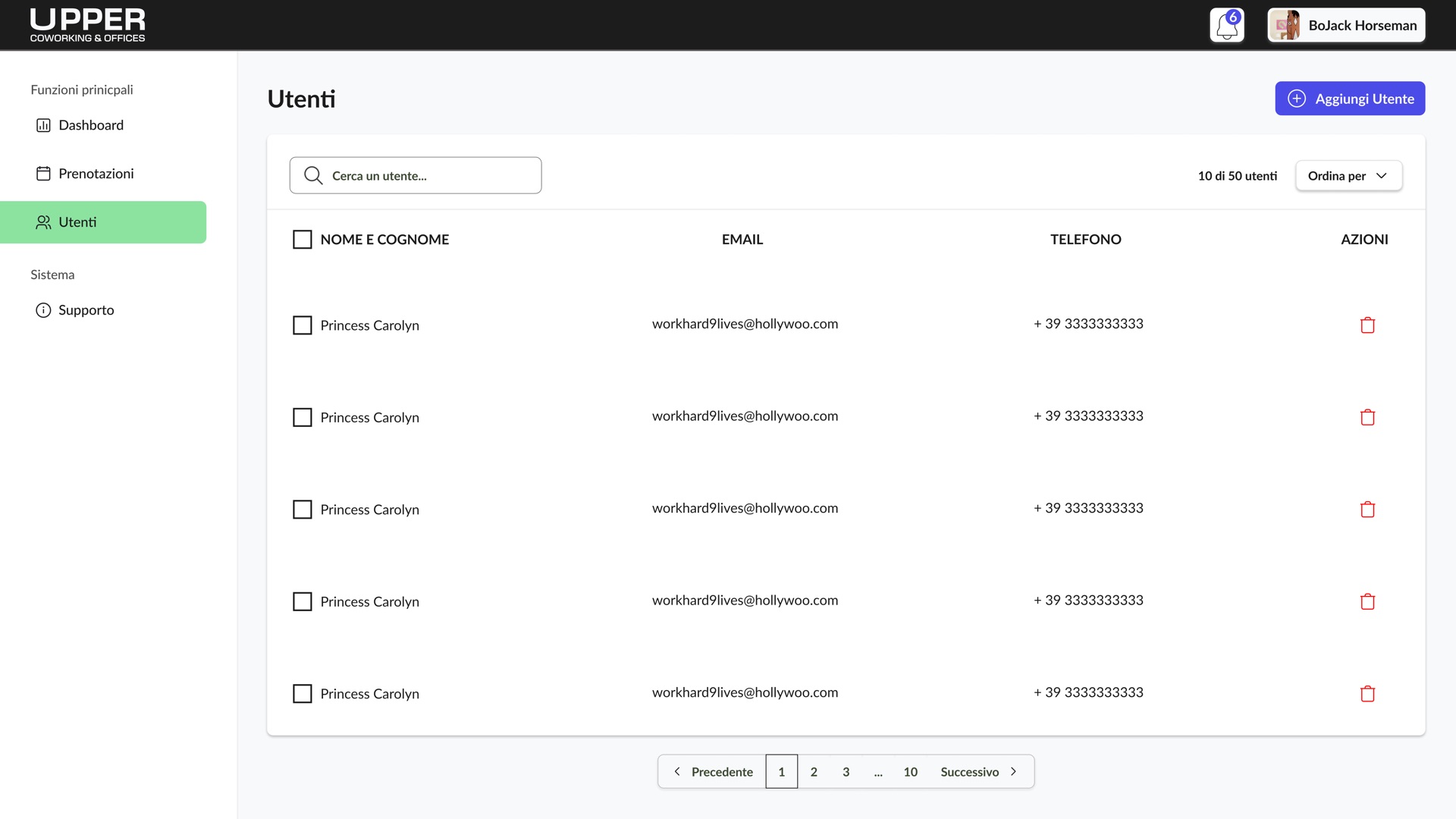
I replaced complex spreadsheets with a **clean, minimalistic directory**. The view prioritizes searchability ("Cerca un utente...") and direct action. Instead of visual noise like avatars or badges, the design utilizes clear text hierarchy and a consistent primary action button ("Aggiungi Utente"), ensuring that member management remains efficient even with hundreds of entries.